
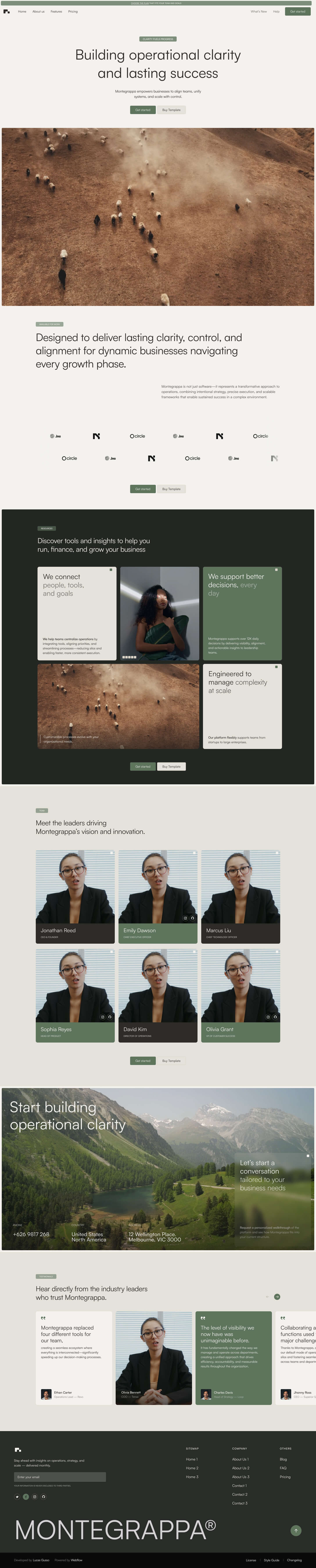
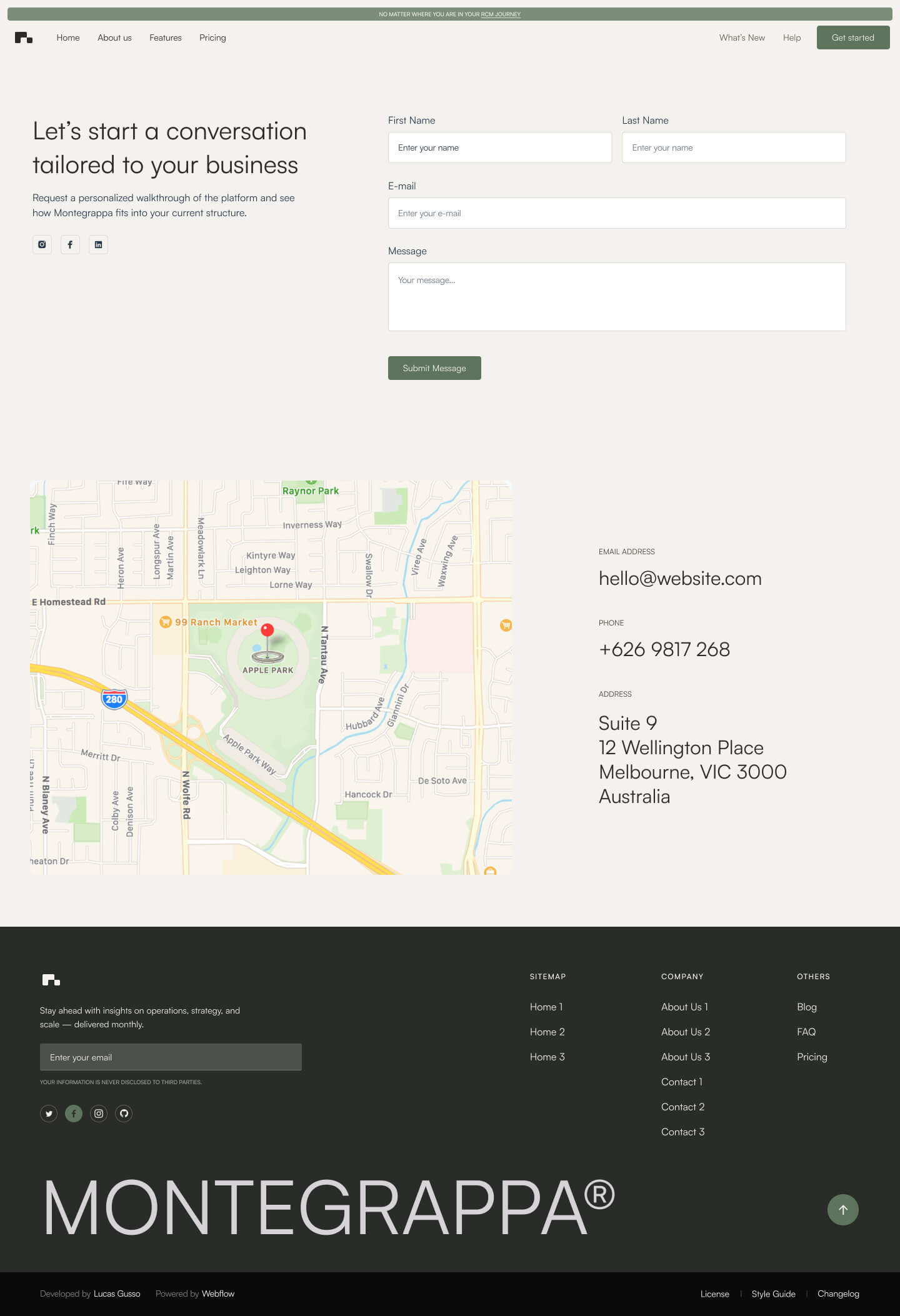
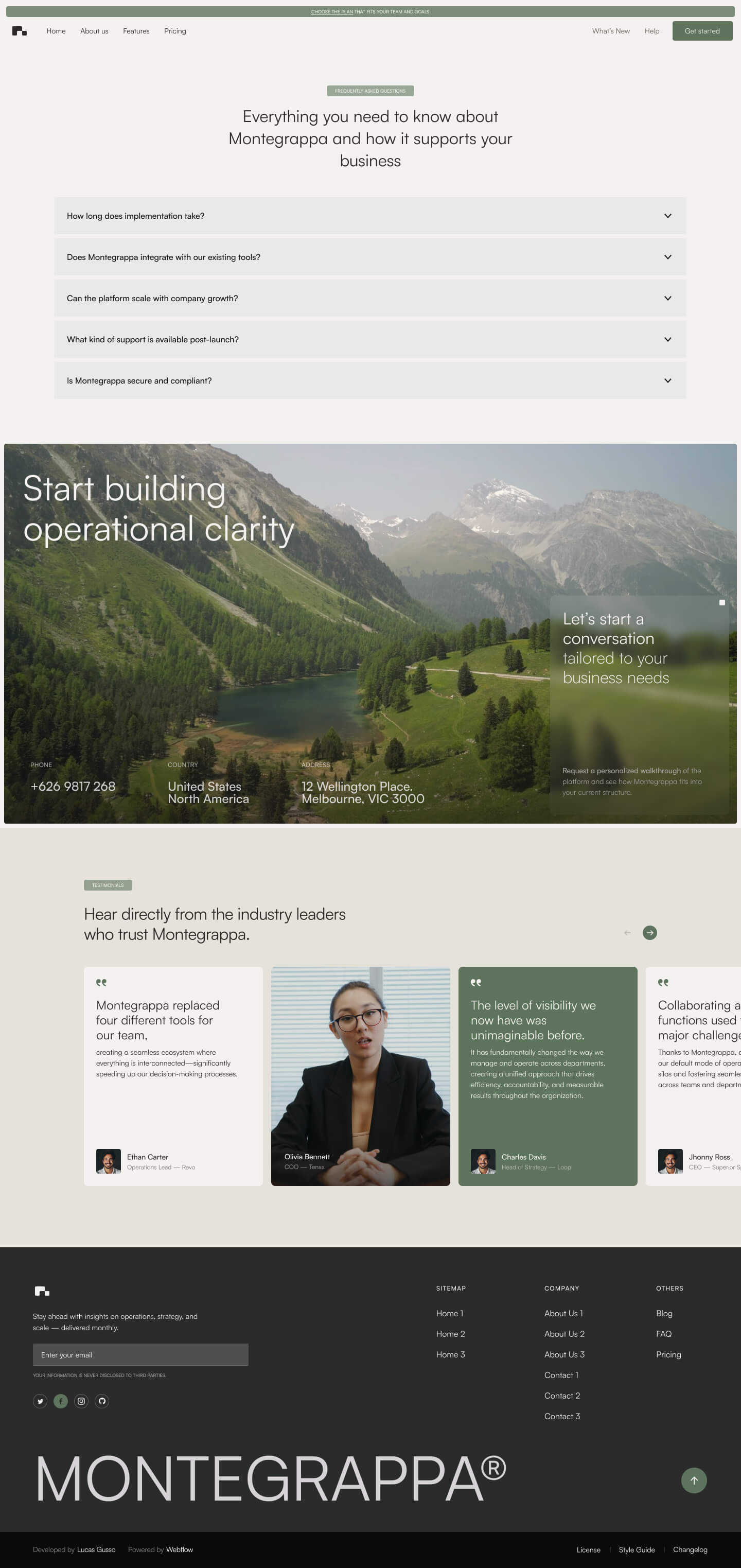
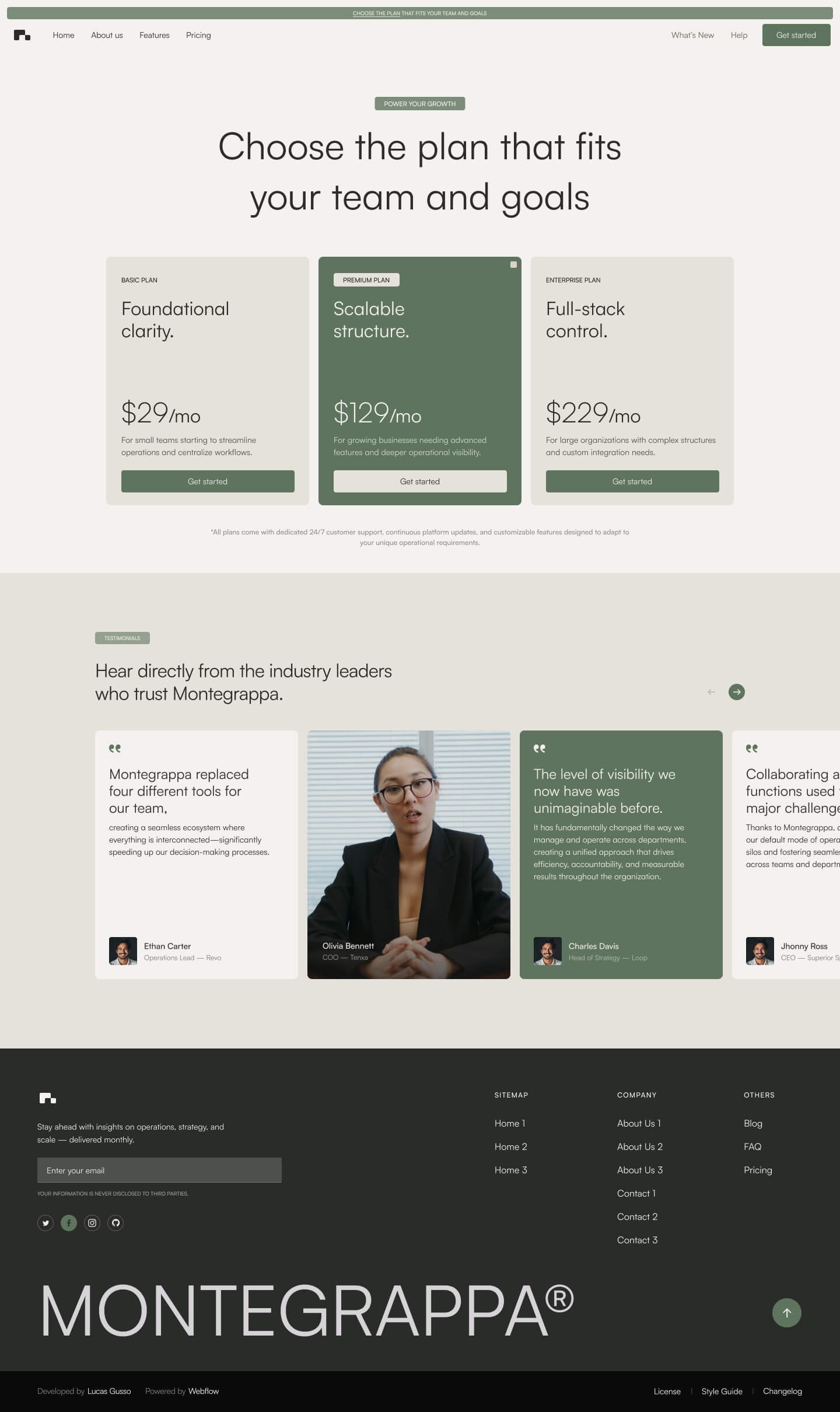
Get a closer look at every layout included in the Montegrappa Template. Each homepage variation is designed for clarity, flexibility, and performance—so you can choose the one that best fits your needs.









Send us an email to lucas.gusso@gmail.com with your purchase receipt, and we will send you the editable Figma file for the Montegrappa Template.

Air cargo trends for 2026

.png)

We expected performance improvements, but the strategic implementation delivered unprecedented operational excellence of delivering products.
As we approach 2026, the air cargo industry finds itself at a pivotal crossroads. What was once a sector defined by manual documentation and reactive logistics has evolved into a high-tech ecosystem driven by data, sustainability, and geopolitical agility. For air cargo software providers and freight forwarders, the upcoming year marks the definitive shift from digital adoption to digital mastery.
To maintain a competitive edge, industry stakeholders must align their strategies with these five defining trends for 2026.
1. The Geopolitical Pivot: The Rise of Southeast Asian Hubs
The global trade map is being fundamentally redrawn. Under the "China Plus One" strategy, manufacturing continues to migrate toward Southeast Asia and India, creating new high-growth corridors.
By 2026, we expect a significant increase in transpacific and Asia-Europe cargo volumes originating from hubs like Vietnam, Malaysia, and India. For software developers, this necessitates a move toward multi-node routing capabilities and localized compliance engines that can navigate the diverse regulatory landscapes of these emerging markets.
2. AI-Native Operations: Predictive Power as a Standard
In 2026, Artificial Intelligence has transcended its status as a buzzword to become the operational backbone of the industry. The focus has shifted from generative AI to Predictive and Prescriptive AI.
Leading air cargo platforms now leverage machine learning to optimize dynamic pricing, predictive maintenance for ULDs (Unit Load Devices), and automated HS code classification. These advancements allow carriers to maximize load factors and minimize ground handling delays, turning vast amounts of raw data into actionable operational intelligence.
3. The Green Mandate: From Compliance to Competitive Advantage
Sustainability has evolved from a corporate social responsibility (CSR) initiative into a rigid regulatory and commercial requirement. With the full implementation of stricter carbon taxing schemes in Europe and North America, 2026 is the year of environmental transparency.
The demand for Sustainable Aviation Fuel (SAF) monitoring and comprehensive carbon footprint reporting is at an all-time high. Software solutions that integrate real-time emission tracking at the shipment level are no longer "nice-to-have"—they are essential for shippers who must meet their Net Zero targets.
4. The E-Commerce Maturity: The "Parcelization" of Air Freight
The relentless growth of cross-border e-commerce has led to the "parcelization" of traditional air cargo. The industry is seeing a shift toward smaller, more frequent shipments that require the same speed and visibility as express courier services.
In response, air cargo software must provide seamless API integrations with global e-commerce marketplaces. The goal for 2026 is total "end-to-end" visibility, allowing every stakeholder in the chain—from the ground handler to the end consumer—to track cargo with granular precision in real-time.
5. Cybersecurity: Fortifying the Digital Supply Chain
As the industry achieves 100% adoption of digital Air Waybills (e-AWB) and moves toward fully autonomous warehouses, cybersecurity has become a core operational priority. The interconnectedness of modern logistics creates vulnerabilities that can disrupt global trade.
In 2026, top-tier air cargo software is defined by its security architecture. Features such as blockchain-verified documentation, multi-factor authentication, and SOC2-compliant cloud infrastructure are the new benchmarks for trust in the digital freight age.
Bridging the Gap Between Logic and Logistics
The air cargo industry in 2026 belongs to the "agile." Success is no longer measured solely by tonnage or fleet size, but by the sophistication of the digital infrastructure supporting them. As volatility remains the only constant in global trade, the right software partner is the most valuable asset a logistics provider can have.
Would you like me to draft a specific "Solutions" section that explains how your software specifically solves these challenges for your clients?
Discover tools and insights to help you run, finance, and grow your business
.png)
Most important air cargo terms
Essential Air Cargo Terminology: A Comprehensive Guide for 2026
.png)
Top 5 mistakes most airlines do
Top 5 Mistakes Most Airlines Still Make in Cargo Operations
Flexible plans that grow with your airline
Spreadsheet Migration
.png)
Add-On Software Modules
End-to-End Cargo System


creating a seamless ecosystem where everything is interconnected—significantly speeding up our decision-making processes.



It has fundamentally changed the way we manage and operate across departments, creating a unified approach that drives efficiency, accountability, and measurable results throughout the organization.

Thanks to Montegrappa, alignment has become our default mode of operation, breaking down silos and fostering seamless collaboration across teams and departments at every level.


The onboarding experience and customization options made it easier than any other platform we've used.

Instead of scattered dashboards, now we make decisions based on real-time insights across every business unit.

Now our operations, finance, and strategy teams work in sync with automated flows and shared context.

We tested six other solutions — Montegrappa was the only one that adapted to our processes instead of forcing change.

Montegrappa helps us plan, adapt, and scale faster. It’s become core to how we think and execute.

Everyone from interns to execs knows what matters most, where we’re headed, and how to act on it.
