
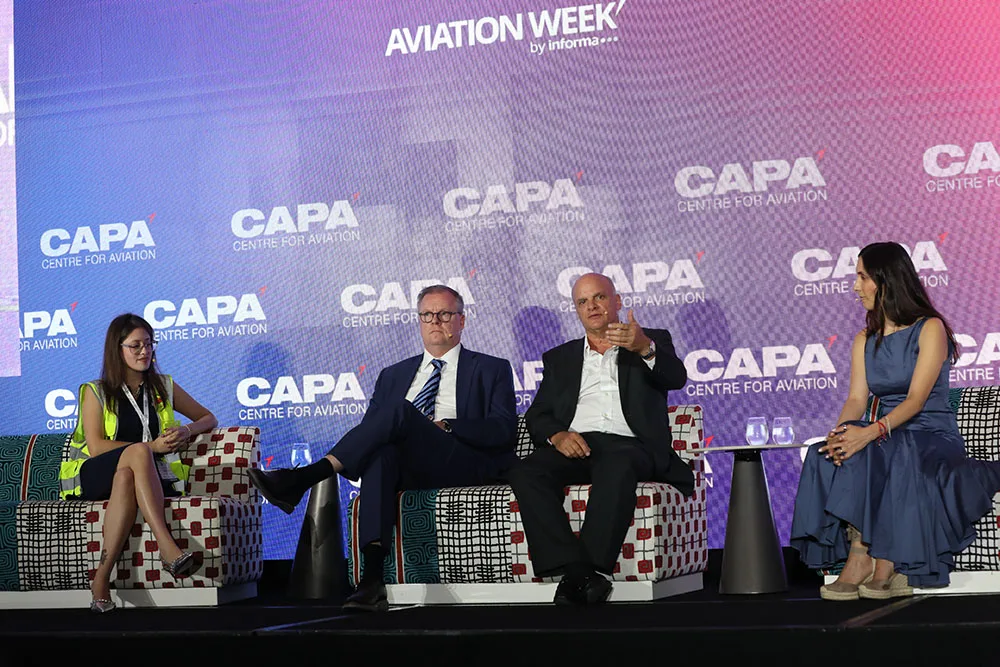
On September 11, 2026, Belli Product Engineer Asael Jalocha moderated "Emerging Opportunities in Air Cargo: Unlocking Latin America's Potential" at the CAPA Airline Leader Summit Latin America & Caribbean in Panama City. On stage with her were Joe Mozzali, Chief Executive Officer of Amerijet International Airlines; Jaime Alvarez, who leads cargo and courier at Copa Airlines; and Lorena Marquez, Sales Director at MasAir.
It was the one dedicated freight session at a summit otherwise led by passenger airline CEOs, so the panel set out to show the room what the belly and the freighter actually carry, and where the business is heading.
Elephants, lab mice and 46 tonnes of Oreos
Asael opened with the strange shipments. MasAir has flown elephants, rhinos, dolphins and penguins, and once carried about 46 tonnes of Oreos from Mexico to Colombia during a local shortage. Amerijet's 50 years in the region include coral from Honduras, exotic cars from Miami to Mexico, a baby giraffe, a cheetah and a shark. Copa once had a belly-hold shipment of laboratory mice come loose. The team counted 204 against an expected 200.
A two-way market
Unlike the Trans-Pacific lane, Latin American air cargo moves in both directions: flowers from Colombia, fish from the Caribbean and okra from Honduras northbound, e-commerce and general cargo southbound. Marquez described a market where e-commerce has displaced general cargo over the past three years and where the business still runs on relationships: "It's who's going to arrive, who answers first, and who takes the business." Alvarez, whose cargo unit sits inside a passenger airline of about 130 aircraft, said much of his job is making the case for cargo internally and competing for resources such as IT.
Fuel, surcharges and who pays
All three named fuel volatility as the toughest part of the job today. Amerijet does not hedge fuel and runs a dynamic surcharge meant to cover the increment rather than make a profit, though Mozzali noted that competitors with passenger arms do not always pass increases on. Passenger airlines sell 60 to 80 percent of their seats two to three months ahead and cannot recover a fuel spike, Alvarez said, while cargo books on much shorter windows. Flower, fish and e-commerce shippers resist increases; pharma shippers less so.
Where AI actually pays
The technology answers were specific. MasAir has built an internal system that reads quote requests and drafts rates and chargeable weight for its sales team, so sellers spend more time with clients. Amerijet, with eleven converted 767 freighters averaging about 32 years old, sees the biggest return in tech ops, moving maintenance from reactive to predictive. Alvarez called AI "a necessary evil" and pointed to pricing, capacity estimation and revenue management as the first uses at Copa. Even with online booking portals available, Mozzali added, customers in Miami still like to call or email their sales team.
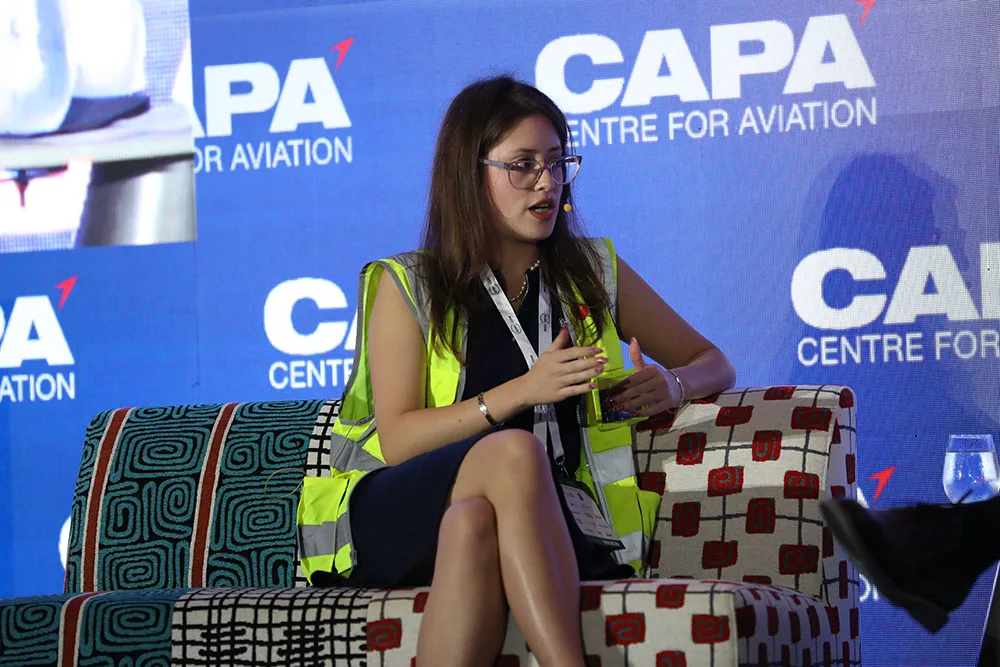 Asael Jalocha moderating the session on day two of the summit. Photo: CAPA.
The next five years
Asked where cargo grows next, Marquez looked beyond the region to sourcing shifts toward India and Vietnam. Alvarez named Venezuela, Guyana, Caribbean tourism, Chilean salmon and Ecuadorian flowers, with high fuel prices as the risk to all of it. Mozzali expects freighter conversions and new widebody freighters to add capacity, and customers to keep asking for faster, day-definite service at air cargo rates: "Everybody wants things faster and cheaper, and you're starting to see that in air cargo, certainly."
The full session is on CAPA TV. Thank you to CAPA for the invitation, and to Joe, Jaime and Lorena for the conversation.